
How to Bleed your Radiators
Bleeding your radiators is one of those DIY tasks that feels intimidating until you do it once. Then, you realise it’s mostly just listening for a hiss and having a rag ready.
If your radiators are cold at the top but warm at the bottom, or if they’re making “gulping” noises, you’ve got trapped air. Here is how to get your central heating back to full strength.
Pre-Flight Check: What You Need
- A radiator key: You can get these for a couple of pounds at any DIY shop like B&Q or Screwfix. (Or use a flat-head screwdriver if your valve has a slot).
- A cloth or rag: To catch any drips and protect your carpet.
- A small bowl: Just in case the water spurts.
- Gloves: The water inside can be hot and, frankly, pretty “inky” and gross.
The Step-by-Step Guide
1. Turn off your heating
This is the most important step. If the pump is running, it might draw more air into the system. More importantly, you don’t want boiling water spraying at you under pressure. Wait about 30–60 minutes for the radiators to cool down completely.
2. Locate the bleed valve
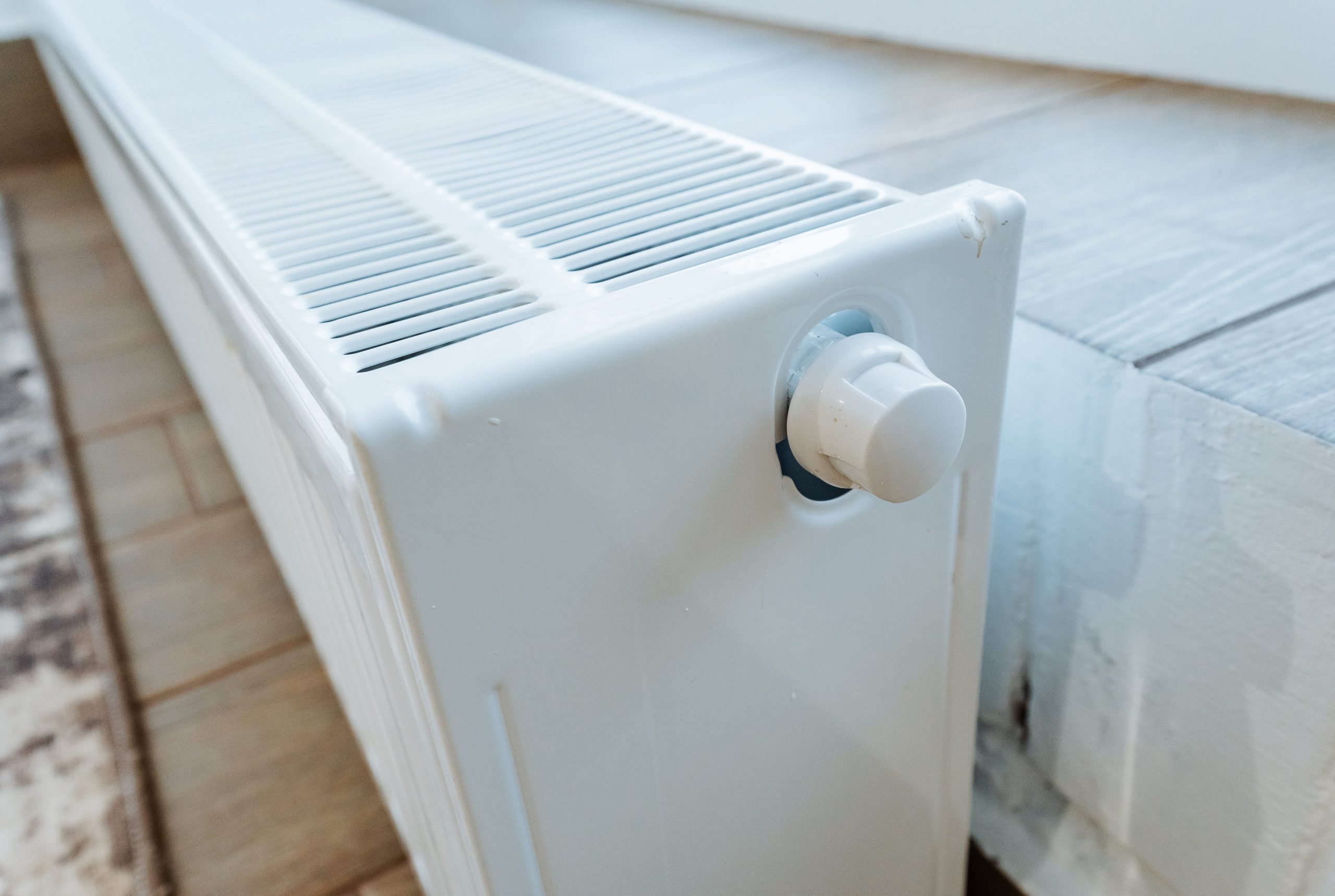
Look at the top end of your radiator. You’ll see a small metal plug with a square centre. This is the bleed valve.
3. Open the valve
Place your bowl on the floor under the valve and hold your rag directly beneath it. Insert the radiator key and turn it anti-clockwise (usually a quarter to a half turn).
Tip: You’ll hear a distinct hissing sound—that’s the trapped air escaping. Don’t unscrew it all the way; you just need to let the air out.
4. Wait for the water
The second the hissing stops, a stream of water will emerge. It’s often discoloured (black or grey) due to internal sludge. As soon as a steady stream of water starts, turn the key clockwise to tighten the valve back up. Don’t over-tighten it; just make sure it’s firm.
5. Check the boiler pressure
Bleeding radiators lets air out, which can cause the pressure in your sealed system to drop.
- Go to your combi boiler and check the pressure gauge.
- It should typically be between 1.0 and 1.5 bar when the system is cold.
- If it’s too low (in the red zone), you’ll need to top it up using the filling loop (usually two small taps under the boiler).
Pro-Tip: The “Bottom-Up” Rule
If you’re doing the whole house, start with the radiator furthest away from the boiler on the ground floor, then work your way up to the highest point in the house.
Contact Us
We are here for any kind of question you might have.