
Controls: What’s What
Keeping your home warm without accidentally heating the entire neighbourhood is a bit of a balancing act. Most people have a “mix and match” collection of controls that don’t always talk to each other.
Here is a breakdown of what each bit of kit does and, more importantly, how to make them work together.
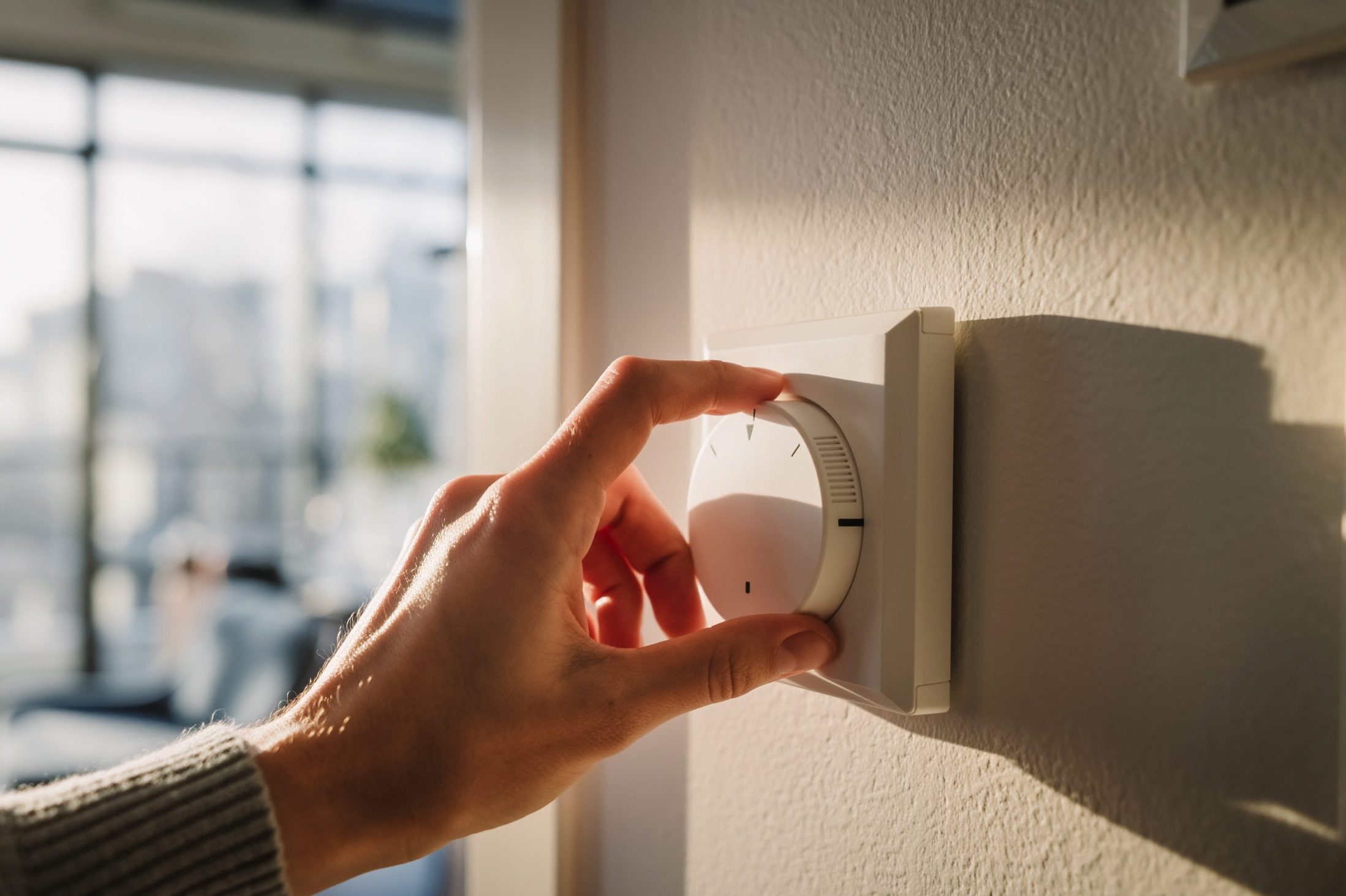
1. Room Thermostats
A thermostat is a simple switch. It tells the boiler: “It’s too cold, turn on” or “We’ve reached the target, turn off.”
- Standard Room Stat (The Dial): This is the classic “set it and forget it” wall unit. It only cares about the current temperature.
- How to use: Set it to your comfortable temperature (usually 18–21°C). If you are going out, you have to manually turn it down, or the boiler will keep firing all day to maintain that heat.
- Programmable Room Stat: This combines a thermostat with a timer.
- How to use: You can set “schedules.” For example: 20°C at 7:00 AM (wake up), 15°C at 9:00 AM (leave for work), and 21°C at 6:00 PM (return). It’s much more efficient because it handles the “turning down” for you.
- Smart Thermostat (Nest, Tado, Hive): These connect to your Wi-Fi and an app.
- How to use: Use the app to set schedules or use “Geofencing” (it senses when your phone leaves the house and turns the heating off automatically). Many “learn” how long your house takes to warm up and adjust accordingly.
2. Thermostatic Radiator Valves (TRVs)
You likely have these on the side of your radiators with numbers 1 through 5.
- What they do: They sense the air temperature in that specific room and throttles the water flow to that radiator.
- How to use:
- Living Room: Set to 3 or 4 (approx. 20°C).
- Bedrooms: Set to 2 (approx. 18°C) for better sleep.
- Unused Rooms: Set to 1 (frost protection) to save money.
- The Golden Rule: Never put a TRV on the radiator in the same room as your main wall thermostat. They will “fight” each other, and your boiler might never turn off.
3. Smart Meters
A smart meter doesn’t actually control your heating; it just tells you how much the other devices are costing you.
- The In-Home Display (IHD): This is the little screen in your kitchen.
- How to use: Watch the “Gas” usage when your heating kicks in. It’s a great reality check. If you see the “flame” icon or a high pence-per-hour rate, it’s a signal to check if you’ve left a window open or if a TRV is cranked to 5 in a room you aren’t using.
4. Boiler Controls
Your boiler itself usually has two dials or digital settings:
- Heating Temperature: This controls how hot the water is that goes to your radiators.
- Tip: For modern condensing boilers, keeping this at a lower setting (around 55–60°C) allows the boiler to run more efficiently (condensing mode), though radiators may feel “warm” rather than “scorching.”
- Hot Water Temperature: If you have a separate tank, this should be set to 60°C to kill bacteria like Legionella.
5. Other Controls
- Cylinder Thermostat: If you have a hot water tank (not a Combi boiler), there is a strap-on thermostat on the side of the tank. This stops the boiler from needlessly heating water that is already hot.
- The “Programmer” (or Timer): In older systems, this is a separate box near the boiler with “On/Off/Auto” switches. “Auto” or “Twice” is usually best, as it follows your timed schedule.
Pro-Tip for Efficiency
Don’t treat your thermostat like a volume knob. Turning it up to 30°C will not make the house heat up faster; it just means the boiler won’t stop until your house is a sauna. Set it to 20°C and let the system do its job.
Contact Us
We are here for any kind of question you might have.