
How to Top Up your Boiler Pressure
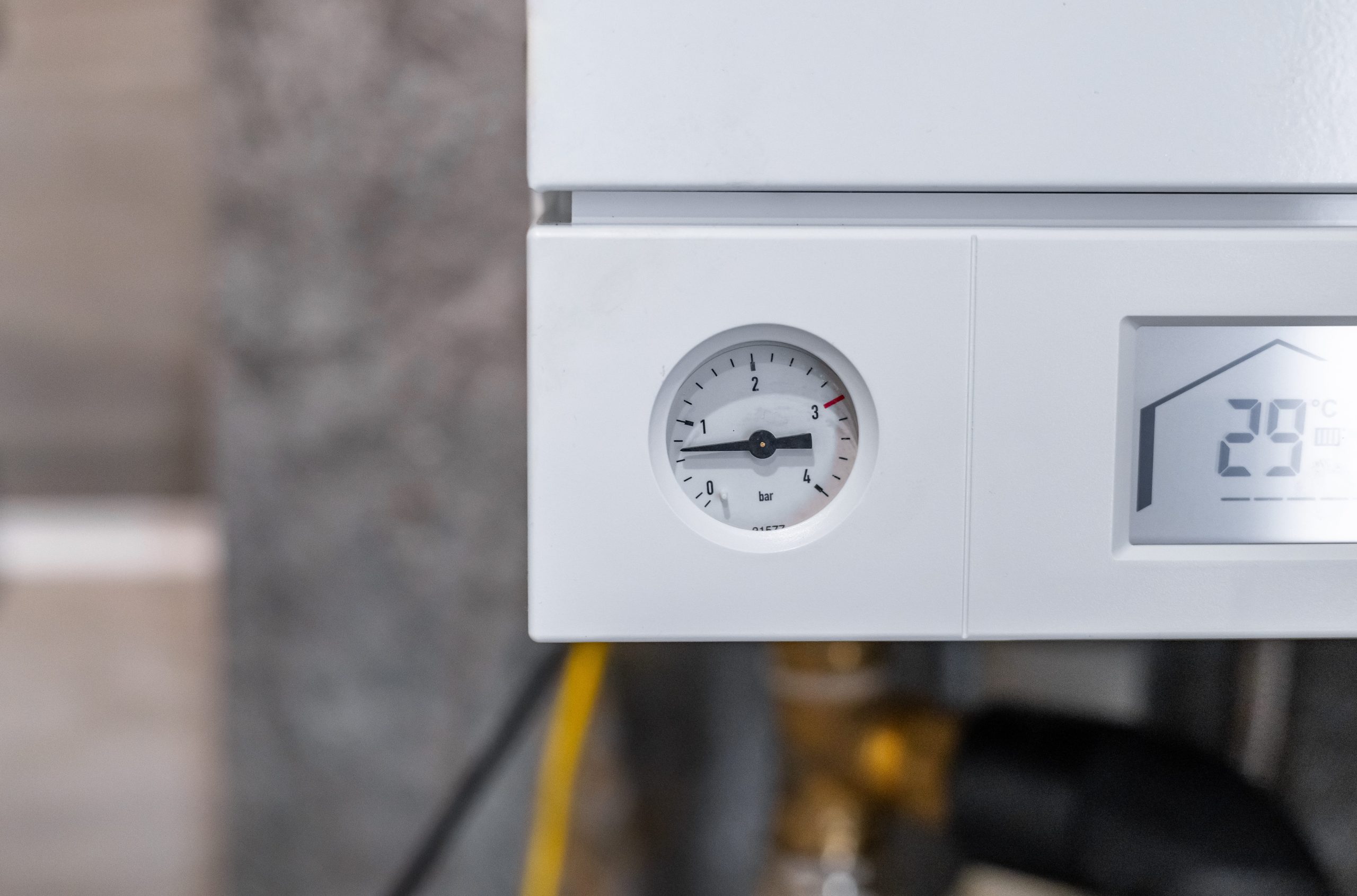
Topping up your boiler—also known as re-pressurising—is essential if air has been released from the system, either from a leak or from bleeding radiators. If the pressure in the system falls below 1.0 bar, your boiler might lock out and refuse to ignite as a safety precaution.
Here is how to get your gauge needle back into the correct zone
Step 1: Identify Your Filling Loop
Look underneath your boiler casing. Most UK households will have one of these three common setups:
- The Braided Hose (External): A flexible silver mesh pipe connecting two copper pipes, featuring a small tap or lever at each end.
- Lever (Keyless) These are often blue, white or black: Often found on modern models. This is a single lever tucked underneath that you simply pull down.
- The Internal Key: A plastic “key” that must be slotted into a specific port on the bottom of the boiler and turned to engage.
Step 2: The Topping Up Process
Safety First: Ensure the heating is turned off and the system has cooled down before you begin.
- Open the valves: If using the silver braided hose, turn both small levers so they are in line with the pipe. You should hear the sound of rushing water entering the system.
- Watch the gauge: Keep your eyes fixed on the pressure dial (or digital display) on the front of your boiler.
- Target 1.5 bar: As the needle moves, wait until it reaches roughly 1.2 to 1.5 bar.
- Close the valves: Quickly turn the levers back to their original position (usually at a right angle/perpendicular to the pipe) to stop the flow.
Warning: Do not get distracted! If you overfill the system (above 2.5 or 3.0 bar), you will have to go back to a radiator and bleed out water to manually lower the pressure.
Step 3: Reset and Test
- Check for leaks: Ensure the filling loop taps are fully closed and not dripping. If you used an external hose, some engineers recommend disconnecting it (keep a cloth handy for the small amount of water left in the hose).
- Power on: Turn your heating back on. It is normal for the pressure to rise slightly as the water expands while heating up.
- Monitor: If the pressure drops back to zero within a few days, you likely have a leak. Check your radiator valves and visible pipework for damp patches.
A Quick “What’s Normal?” Guide
| System State | Ideal Pressure |
| Cold (Off) | 1.0 – 1.5 bar |
| Hot (Running) | 1.5 – 2.0 bar |
| Danger Zone | Above 2.75 bar (Red zone) |
Always refer to your specific manufacturer’s manual for model-specific instructions.
When to Call a Gas Safe Engineer
If “turning the taps” isn’t solving the problem, or the problem keeps coming back, it’s time to call for backup.
- Frequent Pressure Loss: If you find yourself topping it up every few days or weeks, there is a leak somewhere. Constant fresh water introduces oxygen and minerals that corrode your system from the inside out.
- Visible Leaks: If you see water dripping from the boiler casing or any visible pipework.
- The Pressure “Rollercoaster”: If the pressure is low when cold but shoots up into the red zone (above 2.5 or 3 bar) when the heating is on, your expansion vessel has likely failed or lost its charge.
- Error Codes: If the boiler is locking out with a specific fault code (e.g., F22, E119, or F75) and won’t restart after a top-up.
- Dripping External Pipe: If the small copper pipe on your outside wall (the Pressure Relief Valve) is constantly dripping water.
Contact Us
We are here for any kind of question you might have.